
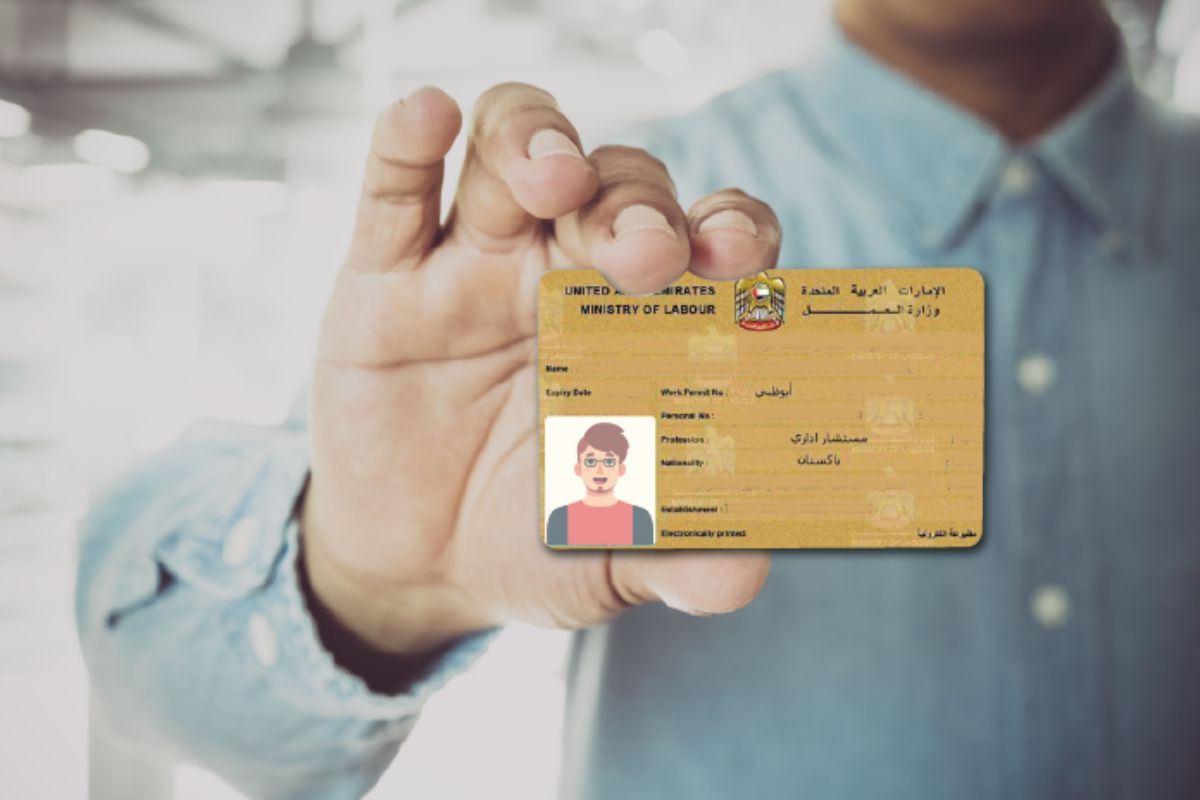
Understanding the UAE Labour Card
A labour card, often called a work permit, is the UAE’s official proof that an individual is legally employed. Issued by the Ministry of Human Resources and Emiratisation (MoHRE) or a free zone authority, it links directly to your Emirates ID and employment record. Without a valid labour card, both employee and employer risk fines, and the employment relationship is not legally recognised.
Historically, labour cards were physical plastic IDs. Today, the process is fully digital. Your record lives within government databases and can be accessed anytime through UAE Pass or MoHRE portals.
The legal requirement for a valid permit originates from Federal Decree-Law No. 33 of 2021, which clearly states that no person may work, and no company may hire, without an authorised work permit.
Why the Labour Card Matters
The UAE labour card ensures that every employee is protected under national labour law. It enables:
- Legal employment verification
- Salary payment through the Wage Protection System (WPS)
- Access to health insurance and end-of-service benefits
- Proof of compliance for employers during inspections
- Eligibility for visa renewals and other government services
For employees, it guarantees fair treatment and benefits. For employers, it demonstrates compliance and safeguards against penalties.
Who Needs a Labour Card in the UAE
Every individual working in the UAE—whether in the mainland or a free zone—requires a valid labour card. This includes:
- Expatriates hired by private companies
- UAE nationals employed in semi-government roles
- Free zone workers under the authority of zones such as JAFZA, DMCC, or DIFC
Specific cases include:
- Family-sponsored workers: Must obtain a work permit to take up a job.
- Job changers: Need their previous card cancelled before a new one is issued.
- Part-time workers: Must hold a part-time work permit.
- Golden Visa holders: Require a labour card when joining a company.
Basic Eligibility
Applicants must be aged 18–60, hold a valid employment offer and contract, and pass a medical fitness test. Skilled roles may also require attested qualifications. Employers are responsible for initiating the application on behalf of their staff.
Types of UAE Labour Cards and Work Permits
The UAE issues several kinds of work permits to match different employment situations:
- Standard Work Permit: For full-time employees hired from abroad; typically valid for two years.
- Free Zone Employment Card: Issued by free zone authorities; valid for one to three years.
- Transfer Work Permit: For employees changing jobs within the UAE.
- Temporary and Mission Permits: For project-based or short-term assignments up to six months or 90 days.
- Part-Time Work Permit: Allows professionals to work for more than one employer.
- Student or Trainee Permits: Enable internships or training for students.
- Golden Visa and Freelance Permits: Designed for long-term residents or independent professionals.
- Juvenile and National Trainee Permits: For young workers or Emirati trainees.
Most permits are valid for two years, though employees over 60 renew annually.
Information on a UAE Labour Card
Each digital labour card contains essential employment details:
- Employee’s full name and nationality
- Employer’s name and work permit number
- Job title and occupation code
- Labour card number (14-digit unique ID)
- Issue and expiry dates
These details are integrated into the WPS for salary processing and verification. The labour card is linked to the Emirates ID, but the two serve distinct functions—one for identity, the other for employment status.
How to Apply for a Labour Card
For Mainland Companies (MoHRE)
- Offer and Contract: The job offer is issued through MoHRE.
- Work Permit Application: Employer applies for a quota and permit.
- Entry Permit Issuance: For new hires arriving from abroad.
- Medical Test and Emirates ID: Applicant completes health checks and biometric registration.
- Visa Issuance: Residence visa is approved.
- Labour Card Creation: MoHRE issues the digital labour card within about five working days.
Government-authorised Tas’heel and Tawjeeh centres often assist with these procedures.
For Free Zone Companies
Free zones operate their own portals. Examples include:
- JAFZA: Through the JAFZA app.
- DMCC: Via the DMCC member portal.
- DIFC: Through the DIFC client platform.
Though not covered by federal labour law, free zones have parallel systems ensuring compliance and worker protection.
How to Check Your Labour Card Online
Employees can easily view or download their labour card details through:
- MoHRE App: Log in with UAE Pass → Employee → Labour Card.
- UAE Pass App: Access “Documents” → Select MoHRE → Labour Card.
- MoHRE Website: Visit mohre.gov.ae → Services → “Print Electronic Work Permit” → Enter details.
- Tas’heel Centres: Visit physically for verification or printing.
- Free Zone Portals: Check via your free zone’s official system.
Labour Card Renewal in the UAE
Labour cards must be renewed before expiry to maintain legal employment.
- Validity: Two years (mainland), up to three in free zones, one for employees over 60.
- Renewal Window: From 50 days before to 50 days after expiry.
- Documents: Updated passport, Emirates ID, employer trade licence, and medical certificate (if needed).
- Process: Employers submit renewals via MoHRE or their respective zone portals.
Late renewals attract fines and may temporarily block new permit applications.
Labour Card Fees and Costs in 2025
Labour card fees depend on the employer’s MoHRE classification system, which rewards compliant companies with lower costs.
- Category 1: AED 250 for two years — high compliance, timely WPS payments, skilled staff, and Emiratisation efforts.
- Category 2: AED 1,200 — moderate compliance; divided into A, B, and C tiers.
- Category 3: AED 3,450 — low compliance or repeated labour law violations.
Additional costs include AED 200 for replacements and AED 5,000 surcharges for hiring employees aged 65 or above.
Penalties for Labour Card Violations
Penalties apply to both employers and employees under Article 166 of the UAE Labour Law:
- Late Application or Renewal: AED 500 fine for employers.
- Working Without a Permit: Up to AED 50,000 per employee, plus possible deportation.
- Repeat Offences: Suspension from new work permit issuance.
- Severe Violations: Fines between AED 100,000–1,000,000 for illegal hiring or fraud.
To stay compliant, always ensure applications, renewals, and cancellations are processed on time.
If Your Labour Card Is Missing or Incorrect
If your card is not found or has incorrect details:
- Verify input information such as permit number and birth date.
- Allow a few days for processing of new permits.
- Contact MoHRE (600-590000) or visit a Tas’heel Centre with your Emirates ID and passport.
- Free zone employees should reach out to their HR department or zone authority.
FAQs
How long does it take to get a labour card?
Once approved, MoHRE typically issues the labour card within five working days. Free zones may take up to a week.
Is the labour card automatically renewed with the visa?
No. Both require separate renewals, even though they are linked.
Can I hold two labour cards?
No. Only one active card is allowed. To work for multiple employers, a part-time work permit is required.
What if my labour card shows wrong details?
Inform your employer immediately. Corrections can be made through a modification request at MoHRE.
Does the labour card include health insurance?
No. Health insurance is mandatory but managed separately. However, a valid labour card is required for employer-provided insurance.
Final Thoughts
The UAE labour card is the foundation of every legal employment relationship in the country. It secures worker rights, ensures timely pay, and helps businesses demonstrate compliance.
Keeping your labour card updated protects both you and your employer — and avoids costly penalties.
If your company needs expert guidance on labour card applications, renewals, or compliance audits, contact OCTAGON for professional assistance tailored to UAE labour law and free zone regulations.
